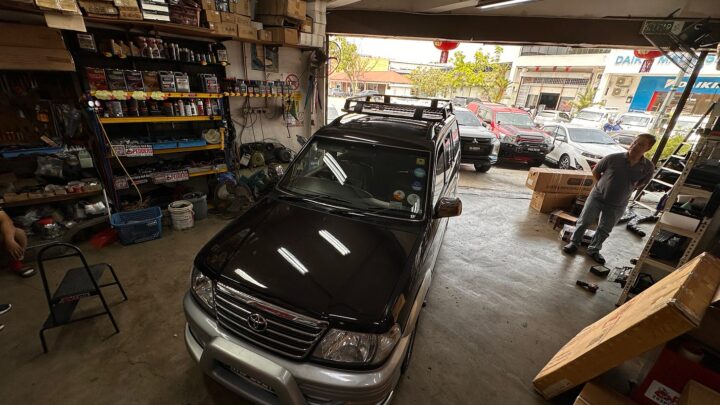
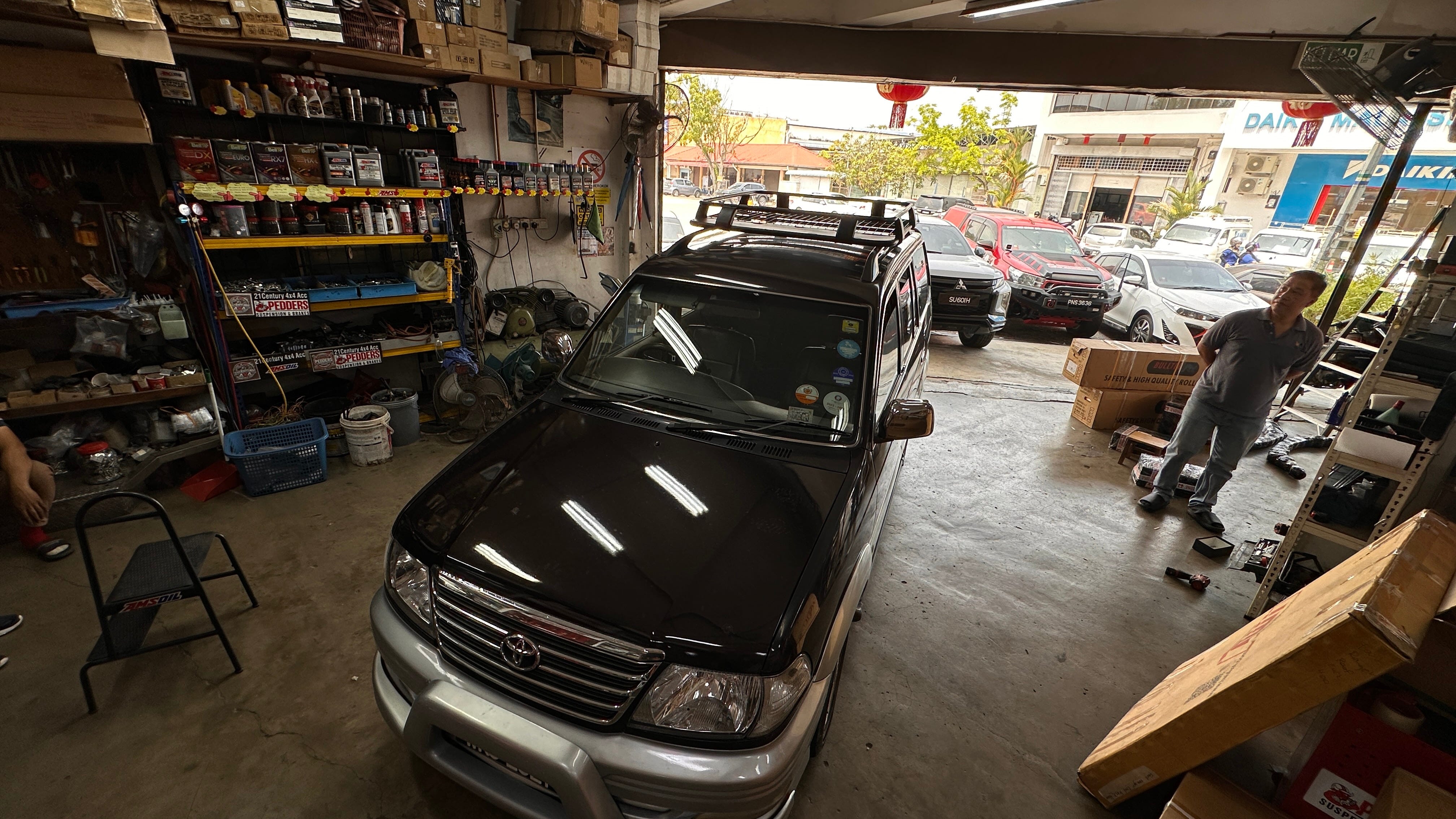
My cheap old MPV is now ‘famous’. Who would have thought?
I guess it struck a nerve because it showed something many of us feel but rarely say out loud: the pain, and the pressure, of keeping up appearances.
To work harder, make more money and buy more ‘stuff’, so it looks like we’re ‘doing well’.
Keeping a cheap old car running was one of the ways I stepped off that treadmill (well partly). But I now know something that took me a while to accept. Spending less is only half the job.
Saving is not enough
Saving is one thing. Making savings grow is quite another.
Leave money in the bank, and three things quietly eat into it.
-
Inflation. Malaysia’s official inflation rate averaged about 1.8% a year over the past decade. That compounds to roughly 19% of your purchasing power gone in ten years, before you’ve done anything wrong.
-
A weaker ringgit. Against the US dollar, the ringgit has been roughly flat over the last ten years. But in mid-2014, one US dollar cost RM3.22. Today it costs about RM4.06. That’s about a fifth of the ringgit’s value gone, and it matters if anything in your future is priced in dollars: an overseas education, travel, most of the technology you will ever buy.
-
Money printing. When the money supply grows faster than the economy, every ringgit, and every dollar, buys a little less. It is slow, quiet and relentless.
None of this is unique to Malaysia. Swap the ringgit for the yen, the pound or the rupiah, and the story rhymes.
So I asked Claude
So, what to do? I asked Claude. I gave it this prompt:
Show me the annual compounded returns over the last ten years, of the following assets, in descending order: S&P500, NASDAQ, Russell 2000, Hang Seng Index, Shanghai Composite, Singapore SGX, MAG7, Gold, Bitcoin, Bursa KLCI, Malaysian Real Estate, Malaysian EPF, Malaysian Fixed Deposits.
Then I added a few follow-ups to make the comparison fair. Reinvest all dividends, because that’s what a patient investor would do. Convert everything into US dollars, so that currency swings don’t muddy the picture. And measure it all against Malaysian inflation, because that’s the bill a Malaysian saver actually pays.
Here’s what it spat out.
What the numbers say
Everything beat Malaysian inflation. Some only just.
At the top sit the usual suspects. Bitcoin compounded at about 60% a year, and an equal-weighted basket of the Magnificent Seven US tech giants at about 36%. The S&P 500, the most boring of index funds, turned every US dollar into about four.
In the middle: gold, Singapore’s Straits Times Index, US small caps and our own EPF. The EPF kept about 4.1% a year after inflation, without a single bad year along the way. That is not nothing.
Then there’s the bottom five. The FBM KLCI, Hong Kong’s Hang Seng, the Shanghai Composite, Malaysian residential property and the humble fixed deposit each kept less than 2% a year after inflation. A ringgit in a fixed deposit in 2016 has the buying power of about RM1.09 today.
One detail stopped me cold. The KLCI only beat inflation because of its dividends. On price alone, Malaysia’s blue-chip index fell about 0.3% a year over the decade. If you held it and spent the dividends, you went backwards.
Two honest caveats about the winners. Bitcoin’s 60% came with falls of more than 70% along the way, and most people don’t sit through those. And nobody bought ‘the Magnificent Seven’ in 2016: the label was coined years later, with hindsight.
Why I wouldn’t read too much into it
But the truth is, we can’t read too much into these results.
Firstly, past performance is not a strong indicator of future results. Even the timing flatters or punishes: these figures were taken in the first week of November 2026, right after a sharp sell-off. A month earlier, most of the risky assets on this list would have looked better.
Secondly, and more importantly, the next ten years are going to look very different from the last ten. Because of AI. Because the world is changing faster than we can imagine.
As if we needed more proof, Microsoft, one of the world’s most important companies, has just offered voluntary exit packages to around 60,000 staff. That’s roughly a quarter of its workforce, as it pours money into AI. Microsoft expects 3,000 or fewer to take it up. But the direction of travel is hard to miss.
Microsoft!
Right now, I’m pretty convinced that the only way to stay ahead of the changes coming our way is to start thinking seriously about what lies ahead. And to consume, digest and chew over quality information and insights about what’s coming down the pipeline.
What we’re doing about it
At the end of this month, Anabelle and I are putting together a half-day of conversations about precisely this.
Money in 2027 takes place on Saturday 28 November, 8.45am to 2pm, at The Ark Plus in Kuala Lumpur. It runs in three parts:
-
Earn it: stocks, crypto and property
-
Build it: a live AI investing workshop
-
Live it: health, time and memories
We also plan to have more physical events and conversations next year.
I cannot guarantee you will get precise answers. Nor names of things to buy (or sell).
But there will be honesty and openness. Directions. Pathways. Conversations.
And community. Because we are all together in this Brave New World.
Tickets are on Luma; you know where to find the link.
Carpe Diem all. Happy Tuesdays.
— Chuang
Notes on method and sources
Not investment advice. No fees, taxes or transaction costs are included.
-
Period: November 2016 to 6 November 2026, compounded annually.
-
Returns: total returns with dividends reinvested, drawn from index and ETF total-return data, then converted to US dollars at the start and end exchange rates.
-
Inflation: after-inflation figures are in ringgit, deflated by DOSM headline CPI (2017–2025 actual; 2026 assumed at 1.9%).
-
Estimates (±0.5 percentage points): the FBM KLCI (price change plus its dividend yield), the Shanghai Composite (an assumed dividend yield of about 2%) and Malaysian fixed deposits (averaged from published deposit rates).
-
Property: the NAPIC Malaysian House Price Index, which is capital gains only. Rental income, maintenance and holding costs are excluded.
-
MAG7: an equal-weighted, annually rebalanced backtest, chosen with hindsight.
-
EPF: declared conventional-savings dividends for 2016–2025.
-
Currency: starting the clock two weeks later, after the ringgit fell in late November 2016, would add about 0.6 percentage points a year to the Malaysian assets in US dollar terms.
Sources: Microsoft buyouts (TechCrunch) · Microsoft take-up (People Matters) · Malaysia CPI (FRED) · 2025 inflation (The Star, DOSM) · Bank Negara Malaysia exchange rates · USD/MYR 2014 (ValutaFX) · EPF dividends (The Star) · NAPIC house price index · S&P 500 total return (Chartrow) · Russell 2000 (Chartrow) · STI ETF (State Street) · Magnificent 7 (PortfoliosLab)